
WELCOME TO AERO BIOTECHNIQUES
KIRTI NAGAR NEW DELHI-110015
WELCOME TO AERO BIOTECHNIQUES
KIRTI NAGAR NEW DELHI-110015

We successfully cope with tasks of varying complexity, provide long-term guarantees and regularly master new technologies.
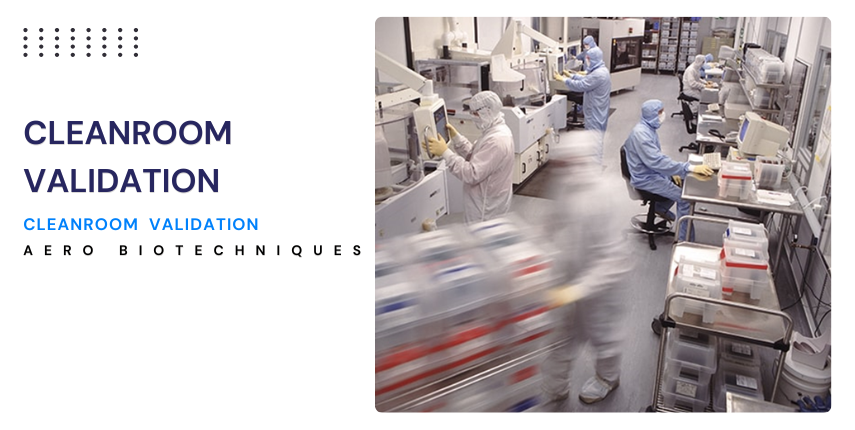
At AERO BIOTECH, cleanroom testing is performed by our highly qualified technicians in accordance with current good manufacturing practices [cGMP], Institute of Environmental Sciences Technologies [IEST], International Organization for Standardization [ISO], and any applicable customer design specifications.
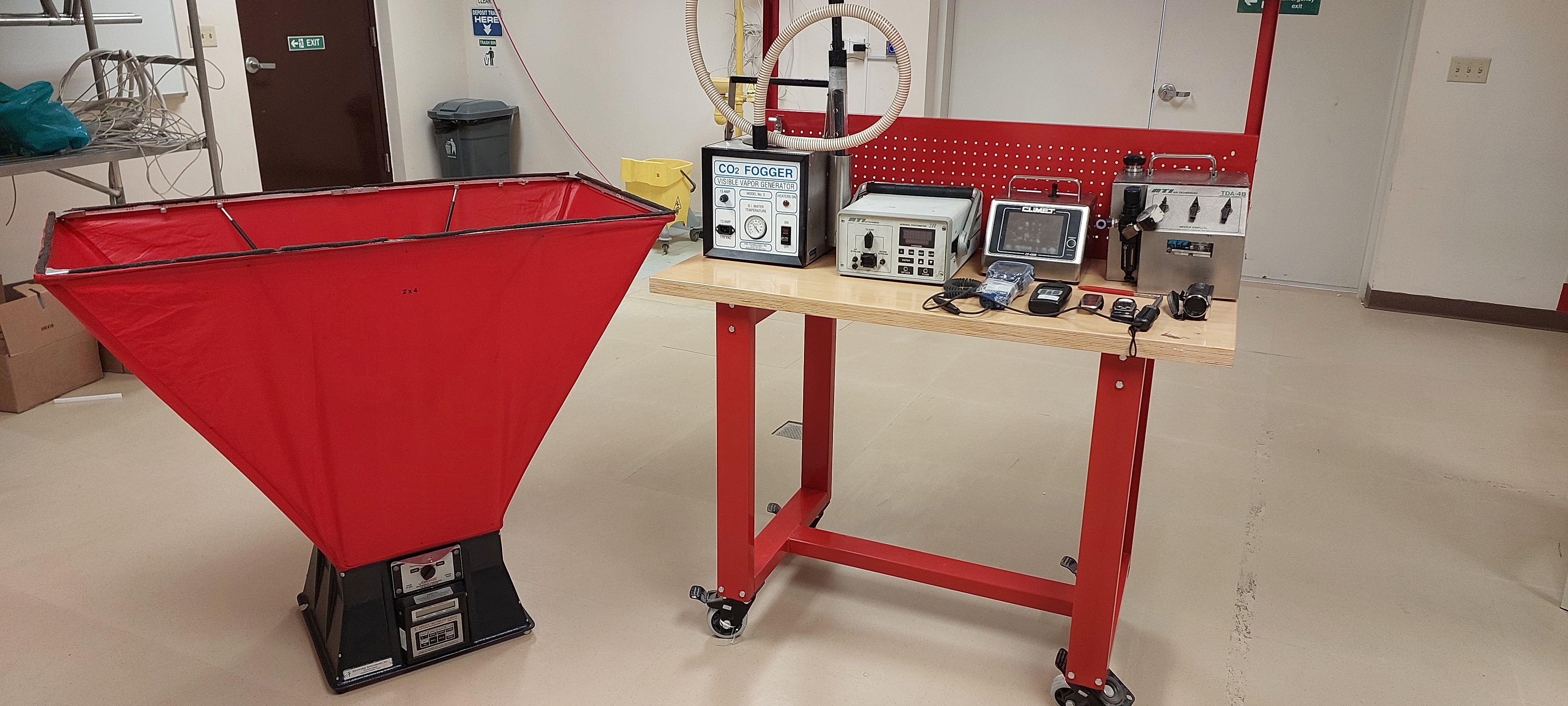
Particle count cleanroom classification defines how clean a controlled environment is by setting limits on the number of airborne particles (like dust, microbes) of specific sizes (e.g., 0.5 µm, 1 µm, 5 µm) allowed per cubic meter (or cubic foot) of air, with major standards like ISO 14644-1 replacing older ones like Federal Standard 209E, categorizing rooms from very clean (ISO 1/Class 1) to less clean (ISO 8/Class 100,000) for industries like pharmaceuticals, microelectronics, and biotech. Aero Biotech provides particle count testing services, we are equipped with particle counters ranging from 2.83 lpm to 100 lpm.
A HEPA Integrity Test (or DOP/PAO Test) is a critical procedure to ensure High Efficiency Particulate Air (HEPA) filters are leak-free and functioning correctly, verifying no contaminants pass through tears in the filter media or gaps in the seals, essential for maintaining sterile or ultra-clean environments like cleanrooms and pharma facilities by using an aerosol challenge (like PAO oil) upstream and scanning downstream with a photometer to find imperfections. Aero Biotech is equipped with aerosol photometers and aerosol generators to provide HEPA integrity testing services. We use PAO (poly alpha olefin oil) to perform the test.
An AHU (Air Handling Unit) Recovery Test assesses a cleanroom's HVAC system's ability to quickly remove a high concentration of airborne particles and return to its specified cleanliness level (ISO standard) after a disturbance, like opening a door or a brief power failure, by measuring the time it takes the AHU to filter contaminants, crucial for industries like pharmaceuticals and biotech. This test confirms the system's efficiency in flushing particles, ensuring rapid restoration of controlled environments, often using an aerosol generator to challenge the system and particle counters to track the clean-up time. Aero Biotech provides recovery testing services as per ISO 14644 standards.
An air flow visualization test, or "smoke study," makes invisible airflow patterns visible using tracer particles (like smoke or fog) to show how air moves in a space, crucial for contamination control in places like cleanrooms, ensuring air reaches design points and identifies turbulent or stagnant zones for better HVAC design and validation. Aero Biotech is equipped with CO2 fogger, Water fogger, Gycerol Fogger, Dry ice fogger, Liquid Nitrogen fogger etc to provide this service.
Temperature and RH (Relative Humidity) monitoring is the continuous tracking of heat and moisture in an environment using sensors to ensure conditions stay within specific limits, crucial for quality control, safety, and compliance in industries like food, pharma, data centers, and museums, using systems that log data and send real-time alerts for deviations. Aero Biotech provide monitoring and logging services for temperature and RH.
An air velocity test measures the speed and direction of air movement, typically using an anemometer, to assess HVAC performance, ensure indoor air quality, maintain industrial safety (like dust collection), and verify cleanroom standards (like HEPA filter efficiency). This testing confirms air is moving at designed rates for comfort, contaminant removal, and system balance, often measured in feet per minute (FPM) or meters per second (m/s). Aero Biotech is equipped with vel grid, vane type anemometer, Hotwire and pitot tube to cover all the range of velocity testing.
Air balancing is the process of testing and adjusting a building's HVAC system to ensure heating and cooling are evenly distributed, delivering the right amount of conditioned air (hot/cold) to each room for optimal comfort, efficiency, and air quality, resolving issues like hot/cold spots and saving energy. HVAC technicians use specialized tools to measure airflow (CFM) and tweak dampers, fans, and controls to match the system's design specifications. Aero Biotech is equipped with capture hood and micro manometers to perform the task in the best professional way.
A containment barrier leak test is a critical quality and safety procedure to check if sealed enclosures (like isolators, cleanrooms, gloveboxes, nuclear containment) have tiny holes or gaps that allow harmful substances (air, radioactive material, contaminants) to escape or enter, often by pressurizing the system and monitoring for pressure drops or airflow changes over time. This non-destructive test ensures operator safety, product purity (e.g., sterility in pharma), and regulatory compliance (GMP, ISO) by verifying the barrier's integrity. Aero Biotech provide barrier leak test as per ISO 14644 standards.
A light intensity test measures the amount of light (illuminance) in a specific area, typically using a lux meter, to ensure it meets regulatory standards, supports visual tasks, enhances safety, and maintains quality control in environments like offices, cleanrooms, or manufacturing plants, confirming light levels are adequate for comfort and function without being too dim or bright. Aero Biotech provides light intensity testing services using Lux Meter as per ILS standards
A UV intensity test measures the strength of ultraviolet radiation, either to assess how materials (like plastics, paints, fabrics) degrade under simulated sunlight (UV weathering) or to check the output of UV light sources (like tanning beds, curing lamps) for calibration, ensuring proper disinfection or curing. It can involve using specialized meters to quantify energy (mW/cm²) or simple color-changing cards that react to UV light, helping determine UV protection needs or product performance over time. Aero Biotech tests UV intensity of LAF, Biosafety cabinets using a radiometer as per NSF 49 standards.
A noise test is a procedure to measure, analyze, and evaluate sound levels in various environments (workplaces, homes, outdoors) using tools like sound level meters to ensure they meet safety, health, and regulatory standards, protecting people from hearing loss and disruption, and identifying problematic noise sources. It helps create comfortable environments by assessing exposure to harmful levels, often requiring action if it exceeds limits (e.g. <90 dB in factories, <45-50 dB in offices). Aero Biotech uses a sound meter to check sound levels in cleanrooms, Laminar Hoods, Biosafety cabinets etc as per international standards.
A vibration test is a controlled process that subjects products, components, or structures to simulated real-world shaking (vibrations) to assess their durability, reliability, and performance, uncovering design flaws, weaknesses, or potential failures before market release or during operation, crucial for industries like automotive, aerospace, and electronics. These tests use shakers to apply specific frequencies, amplitudes, and directions to mimic road bumps, transportation stress, or operational wear, ensuring safety and longevity. Aero Biotech provides vibration testing for various applications.
Viable monitoring is the process of detecting and quantifying living microorganisms (like bacteria, fungi) in the air or on surfaces, crucial for quality control in pharma, food, and cleanroom environments to prevent product contamination. It confirms if a contamination risk exists by sampling, culturing, and counting living cells (CFU/m³), unlike non-viable monitoring which counts all particles, living or dead. Methods include active sampling (drawing air through a culture plate) and passive (settling plates), with newer technologies offering real-time data for better risk management and faster response to excursions. Aero Biotech offers passive and active air sampling using a air sampler of 100 cfm for pharma and medical applications.
Compressed air purity testing is the standardized process of analyzing compressed air to detect and measure contaminants like water, oil, and solid particles, ensuring it meets specific quality requirements for industrial use, especially in sensitive sectors like food, pharma, and healthcare, to prevent equipment damage, product contamination, and health risks, often following standards like ISO 8573-1. This involves sampling air from the system and checking for these impurities, plus sometimes microbes, to assign a purity class and verify system performance. – ensures compressed air and gas systems meet the requirements of the controlled environment, testing includes: non-viable and viable particulate, total hydrocarbon (oil), and dew point determination.
Aero Biotechniques is a cleanroom validation service providing company. ABT also is a major supplier of Air Filters and...